Published Aug 2026
Settings Overview
Settings is where administrators configure how AVLView works for the whole organisation — who can sign in, which vehicles and hardware are tracked, and how alerts and reports behave. Most settings are admin- or owner-only.
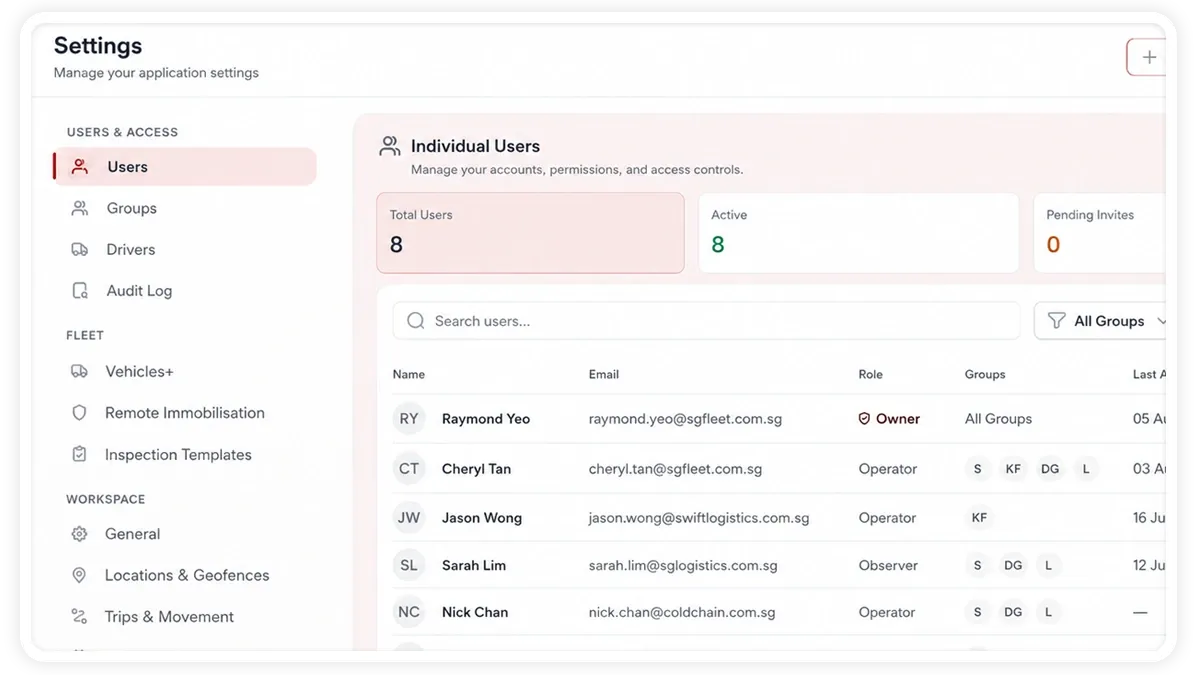
How Settings is organised
The left navigation groups everything into four areas:
- Users & Access — users, groups, drivers, and the audit log. Control who can sign in and what they can see.
- Fleet — vehicles & hardware, add-ons & sensors, remote immobilisation, and inspection templates. Everything about the physical fleet and its devices.
- Workspace — general/organisation details, business schedule, notifications, display & interface, and locations. Tune AVLView to how your organisation runs.
- Billing & Integrations — the developer API and related integration settings.
Common tasks
- Add a user — give a colleague sign-in access with the right permissions.
- Edit vehicle details — update a vehicle's name, registration, or attributes.
- Personalise your logo and URL — brand the workspace for your organisation.
Frequently asked questions
Who can change these settings?
Most settings are restricted to administrators and owners. If a section is greyed out or missing, ask an administrator on your account to grant access.
What is the difference between users and drivers?
Users sign in to AVLView; drivers operate vehicles and are identified by hardware or phone. They live in separate sections under Users & Access.
Related
Next
Invite & Manage Users
Invite one or many portal users at once, assign them to vehicle groups, set a role, then edit, resend, revoke, or remove access from Settings > Users.
More in Settings & Admin
Didn't find what you needed?Contact support