Cold Chain Certificate
The Cold Chain Certificate report turns your temperature data into a per-trip compliance document, proving that each refrigerated delivery stayed within its required range. It is built for teams that must show auditors, regulators or customers that the cold chain was never broken.
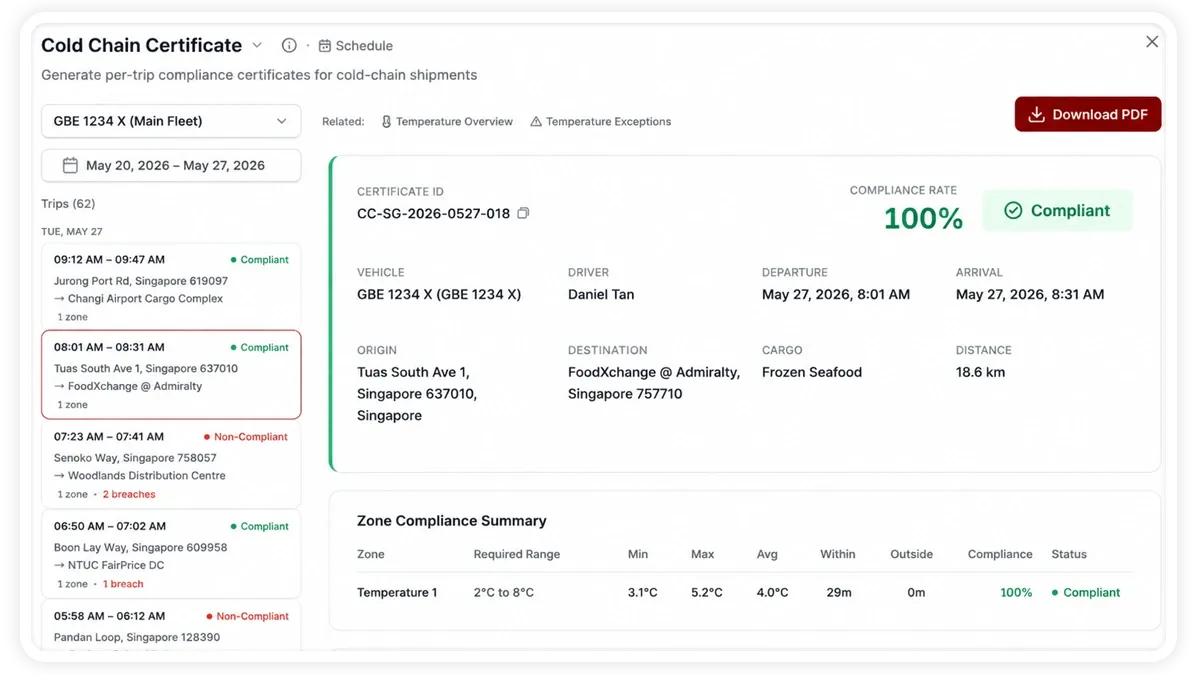
What the report shows
The report evaluates each trip against its temperature requirement and summarises the outcome:
- Trips Certified — the total number of trips assessed for the period.
- Compliant — trips that stayed within the required temperature range for the whole journey.
- Non-Compliant — trips where the temperature moved out of range at some point.
- Compliance Rate — the share of trips that passed, giving you an at-a-glance measure of cold-chain reliability.
How to run it
- Open Reports and choose the Sensors & Add-ons category (or search “cold chain”).
- Select Cold Chain Certificate.
- Set the date range you want.
- Click View to see it on screen, or Download for a PDF or Excel copy.
Schedule it
Use the Scheduled tab to send certificates automatically — for example a weekly batch of the past week’s trips — so your compliance file stays up to date without manual exports.
Frequently asked questions
What makes a trip compliant?
A trip is compliant when every temperature reading stayed inside the required range for that load, for the full duration of the journey. A single out-of-range period marks the trip non-compliant.
What hardware do I need for a certificate?
Each vehicle needs a temperature sensor add-on connected to its AVLView device so readings can be logged across the trip. Without the sensor there is no data to certify.
Related reports
Learn more about this feature
Explore feature