How Drivers Block or Cheat GPS Trackers: 9 Tricks and How to Catch Every One

What You'll Learn
From foil wrapping to plug-in jammers, here are the 9 tricks drivers use to defeat vehicle trackers — and the alerts that catch every one.
Best for:
Logistics & Delivery professionals and fleet managers
Drivers defeat GPS trackers in three basic ways: they jam the signal, they block or break the hardware, or they cut its power. Every one of these tricks leaves a data signature — a gap, a flatline, or an alert — that a properly configured fleet platform catches within minutes.
If your trackers keep "failing" on the same vehicles, or trips are ending with fuel missing and kilometres unaccounted for, this guide is for you. We'll walk through the 9 most common tricks drivers use, how to spot each one, and how to set up your system so cheating stops being worth the effort.
Why Drivers Cheat Their Trackers
Most drivers are honest. But the ones who aren't usually have one of three motives.
Off-book work. The vehicle becomes a private taxi or moves side-jobs during work hours — most often on evenings and weekends.
Fuel theft. Fuel is siphoned or a fuel card is misused, and the tracker's odometer and fuel data would expose the mismatch.
Privacy pushback. Some drivers simply resent being watched. This one is best solved with communication and fair policy, not just technology — more on that at the end.
Whatever the motive, the methods are remarkably consistent. Fleet operators from Dubai to Lagos report the same nine tricks, and each has a reliable tell.
The 9 Tricks Drivers Use — and How to Catch Each One
1. Plug-In GPS Jammers
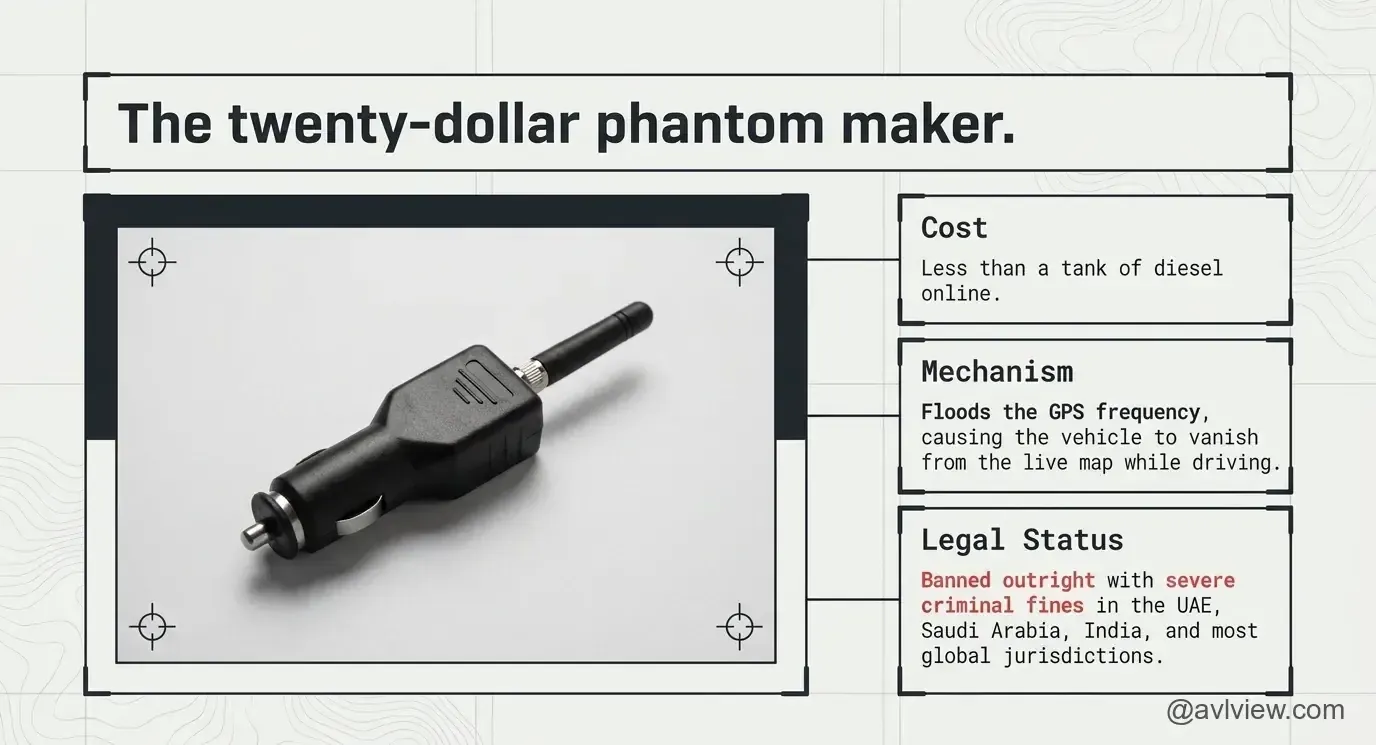
Small jammers that plug into the cigarette lighter cost less than a tank of diesel online. They flood the GPS frequency so the tracker can't compute a position — the vehicle simply vanishes from the map while it drives.
They're also illegal almost everywhere: the UAE, Saudi Arabia, India and most other countries ban their sale and use outright, with serious fines. That rarely stops a determined driver.
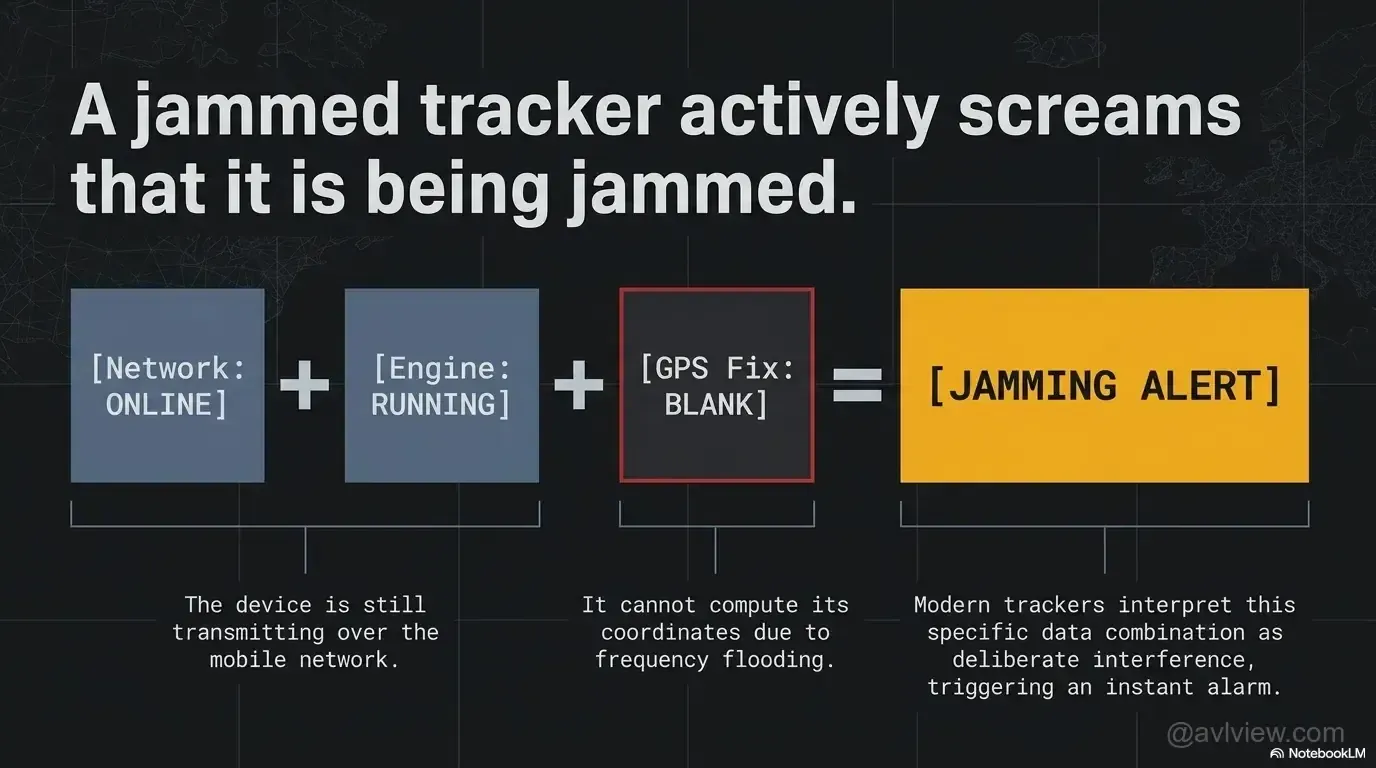
How to catch it: A jammed tracker doesn't go silent — it keeps transmitting over the mobile network but reports no valid GPS fix. That pattern (device online, position frozen or lost, engine running) is distinctive. Modern trackers flag it as a jamming event, and platforms like AVLView turn it into an instant alert. A jamming alert during work hours is close to a smoking gun.
2. Wrapping the Device or Antenna in Foil
The oldest trick in the book. A few layers of aluminium foil around the tracker or its antenna attenuate the satellite signal enough to blind it — no illegal hardware needed.
How to catch it: Same signature as jamming: the device stays connected over the cellular network but loses GPS fix while the vehicle is clearly in open terrain. Repeated "no fix" periods on one vehicle — while the rest of the fleet on the same roads tracks fine — points straight at foil.
3. Pulling the Fuse or Cutting the Power Line
A driver who knows where the tracker is wired can pull its fuse in seconds. The device goes dark, the trip disappears, and the driver plans to reconnect it before returning to the yard.
How to catch it: Two layers. First, any tracker worth installing has an internal backup battery and sends a power-cut alert the moment external power is lost — before the battery runs down. Second, the platform's daily reports show an odometer jump: the vehicle "teleports" from where it went dark to where it came back online. Both are hard to explain away.
4. Unplugging OBD Trackers
Plug-and-play OBD trackers are popular because they install in seconds — which means they uninstall in seconds too. The driver pulls the tracker out of the port, does the off-book trip, and plugs it back in.
How to catch it: OBD trackers report disconnection events, and the platform logs the gap between unplug and replug. If you run OBD hardware, make the disconnect alert non-negotiable. For vehicles where cheating is a recurring problem, switch those units to hardwired trackers with covert installation — AVLView is device-agnostic across 200+ GPS models, so you can mix hardware per risk level.
5. "Accidentally" Breaking the Antenna
A damaged GPS antenna produces weak, drifting positions or none at all — and it looks like an equipment failure rather than sabotage. Some drivers help that failure along.
How to catch it: Track the pattern, not the incident. Genuine antenna failures are random across a fleet; suspicious ones cluster on the same vehicle or driver, and often recur days after each repair. Pair the device-health report with your maintenance log and the pattern surfaces quickly.
6. Hiding in Dead Zones
Underground car parks, tunnels, and remote areas with no cellular coverage create legitimate tracking gaps. A clever driver parks in one, then takes the vehicle elsewhere assuming the gap covers the detour.
How to catch it: Trackers don't stop recording when they lose network — they buffer positions in memory and upload the backlog once coverage returns. The "hidden" trip appears in the history a few minutes later. Geofencing helps too: draw zones around approved parking areas and get an alert whenever a vehicle exits outside its shift.
7. GPS Spoofing
Spoofing — feeding the tracker fake satellite signals so it reports a false location — has moved from military labs to cheap hardware and phone apps. It's still rare in commercial fleets, but it's the trick that's growing fastest.
How to catch it: Spoofed positions fail plausibility checks: the vehicle "sits parked" while the engine reports running and the odometer climbs, or it jumps between points at impossible speeds. Cross-referencing GPS distance against CAN-bus odometer data exposes it — one more reason to prefer trackers that read vehicle data, not just position.
8. Swapping Devices Between Vehicles
In fleets where trackers are loosely installed, drivers sometimes move a tracker onto a colleague's vehicle — or onto a vehicle staying in the yard — so their assigned unit appears parked all day.
How to catch it: Device-level data gives it away: the tracker reports ignition, movement and sometimes CAN data from the wrong vehicle profile — an odometer that doesn't match, a fuel curve from a different tank size. Driver identification (iButton or RFID keys tied to each trip) closes the loop: if the vehicle moves with no driver logged in, that's an alert on its own.
9. Letting the Tracker "Fail" — and Stalling the Repair
The quietest trick of all: the tracker breaks (or is broken), and the driver simply never mentions it. Weeks pass with the vehicle untracked while the repair ticket sits at the bottom of the pile.
How to catch it: Make silence itself the alarm. A device-offline report — every unit that hasn't reported in 24/48 hours, on one page — turns "nobody noticed" into "flagged this morning." In AVLView this is a standing report; the fleets that review it daily keep their tracking coverage above 99%.
Suspect any of these are happening in your fleet right now? See how tampering alerts work →
A Real Example: The 42-Minute Gap
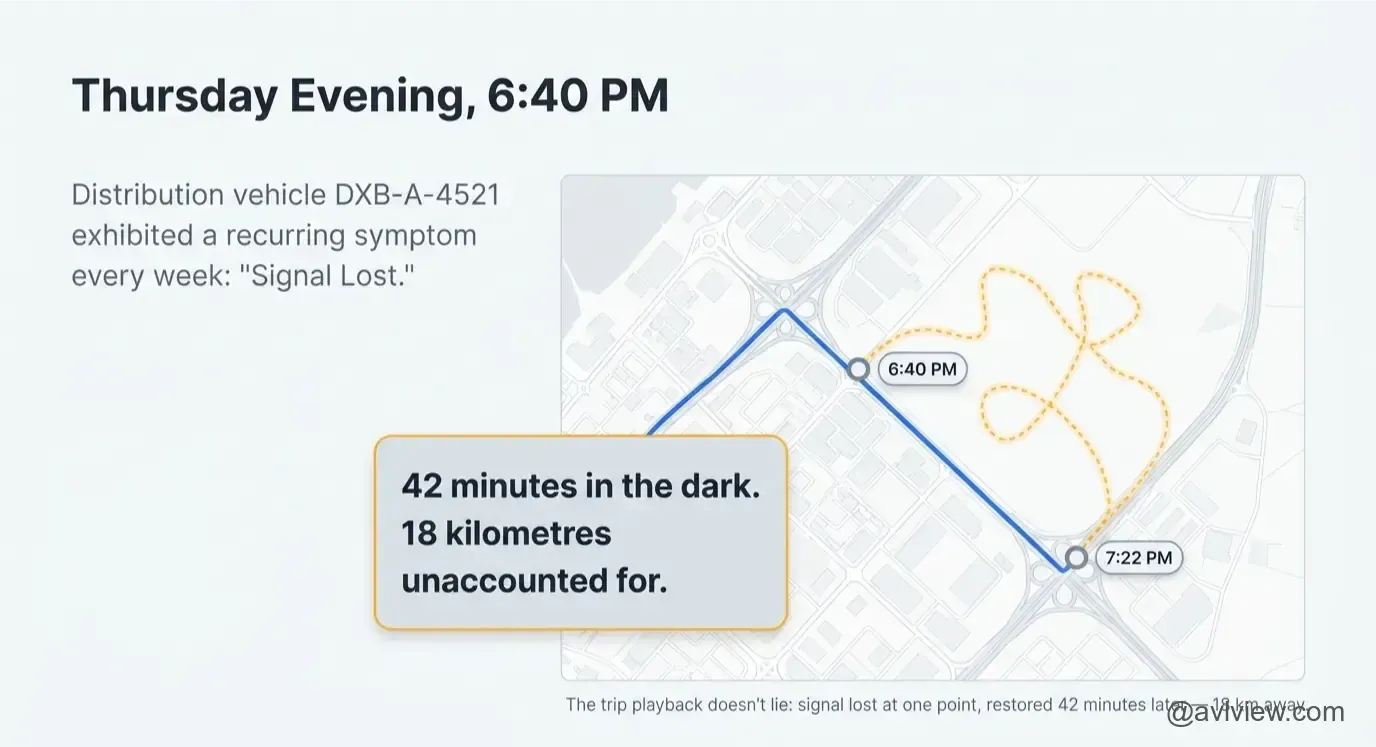
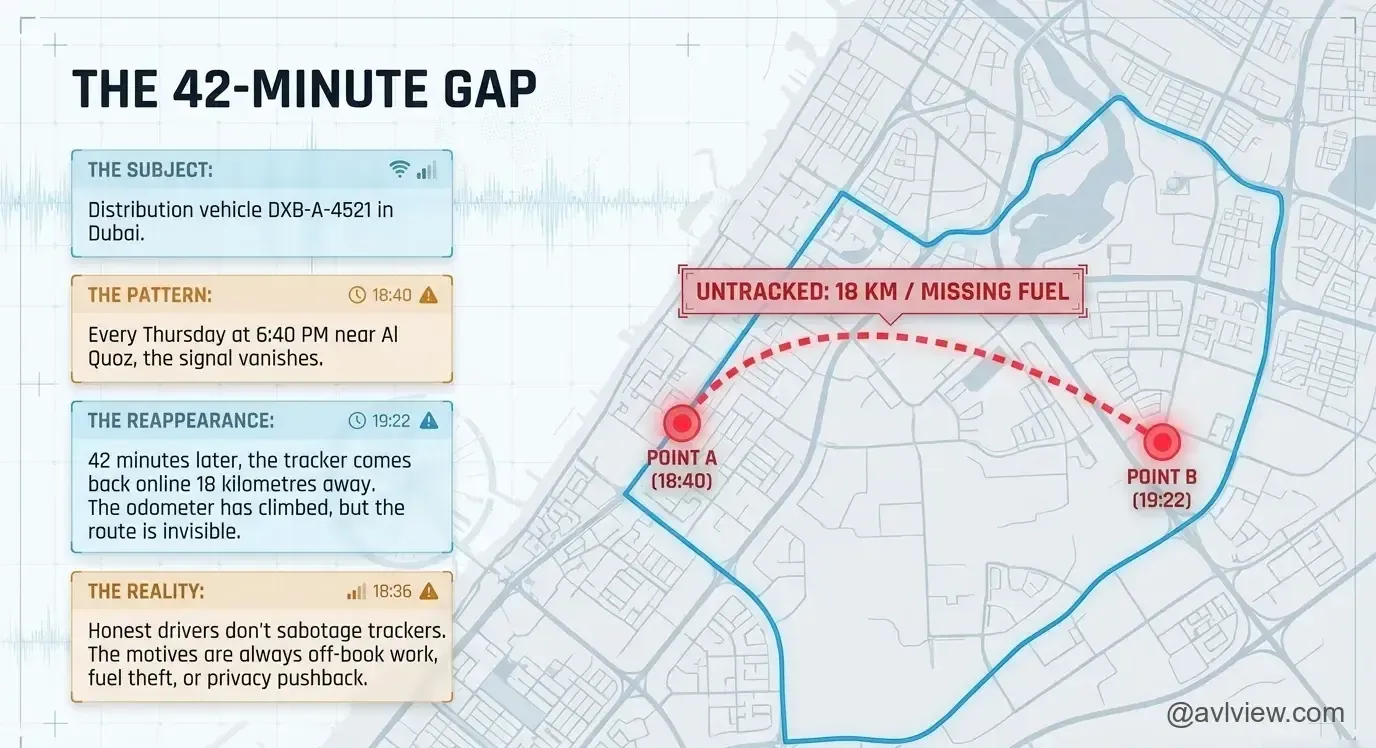
Here's how this plays out in practice. A distribution fleet in Dubai noticed vehicle DXB-A-4521 kept "losing signal" on Thursday evenings.
The trip playback showed the same pattern each week: signal lost near Al Quoz at 6:40 pm, restored 42 minutes later — 18 kilometres away, with the odometer showing the distance travelled while dark. The driver had been pulling the tracker's fuse for a weekly side delivery, then reconnecting it.
The fix took ten minutes: a power-cut alert on that vehicle, plus a weekly signal-gap report for the whole fleet. The Thursday gaps stopped the same week — and fuel consumption on that vehicle dropped 11%.
Every Trick Leaves a Signature
Notice the pattern: not one of the nine tricks is actually invisible.
| Trick | Data signature | What catches it |
|---|---|---|
| GPS jammer | Online, no GPS fix, engine on | Jamming alert |
| Foil wrapping | Repeated no-fix on one vehicle | Signal-loss pattern report |
| Pulled fuse | Power lost + odometer jump | Power-cut alert (backup battery) |
| OBD unplug | Disconnect event + trip gap | Disconnect alert |
| Broken antenna | Failures cluster on one vehicle | Device-health report |
| Dead-zone hiding | Buffered positions upload later | Trip history + geofence exit alert |
| GPS spoofing | Position vs CAN odometer mismatch | Plausibility cross-check |
| Device swapping | Wrong vehicle profile data | Driver ID + device mismatch |
| Silent failure | Days offline, no report | Device-offline report |
A tracker that goes quiet is not a mystery. It's a message — you just need the alerts switched on to read it.
Most of those signatures come from the vehicle’s own data — engine status, power, fuel and device health — not just its position on a map. That’s the practical line between plain location tracking and full telematics: GPS tracking vs telematics breaks down which one your fleet needs to catch tampering like this.
How to Make Your Fleet Cheat-Proof
You don't need new hardware to stop most of this. You need five settings and one policy.
1. Install hardwired trackers covertly, with backup battery. For high-risk vehicles, skip the OBD port. A hardwired unit behind the dash, with its own battery, survives fuse-pulling and takes real effort to find.
2. Switch on tamper, power-cut and jamming alerts. These exist in AVLView's alert engine — they just need enabling. Route them to a manager's phone, not an inbox nobody reads.
3. Review the signal-gap and device-offline reports weekly. Ten minutes a week. Random failures are scattered; cheating clusters. The pattern is obvious once someone actually looks.
4. Cross-check fuel against trips. Fuel drops while a vehicle is "parked and dark" tell you what happened during the gap. Fuel monitoring plus trip data catches what either misses alone.
5. Tie trips to drivers, not just vehicles. Driver ID keys mean every kilometre has a name on it. Driver scoring then rewards the honest majority instead of only punishing the outliers.
And the policy: tell your drivers the vehicles are tracked, what's monitored, and why — safety, fuel, and fair workload, not surveillance for its own sake. Fleets that pair transparent policy with visible enforcement see tampering drop to near zero, because the two things that make cheating attractive — anonymity and low odds of detection — are both gone. Typical operators recover 8–15% in fuel costs alone once the gaps close.
The Bottom Line
Drivers can jam, wrap, unplug, break, hide, spoof, swap or starve a GPS tracker — nine tricks, nine signatures. The technology to catch every one of them already exists and, in most fleet platforms, is already paid for. It just needs to be switched on.
AVLView gives 43,000+ fleet owners across the Middle East, Africa and Asia the full anti-tamper toolkit: jamming and power-cut alerts, signal-gap reports, driver ID, fuel cross-checks and live tracking that buffers through every dead zone.
See exactly what your drivers' trackers have been hiding. Get a free demo →
Frequently Asked Questions
Is it illegal for drivers to use GPS jammers?
Yes, in almost every country. The UAE, Saudi Arabia, India, and most other jurisdictions prohibit the sale, ownership and use of GPS jammers, with substantial fines and even criminal liability. A driver caught using one typically faces both legal exposure and dismissal for cause.
How do I know if a driver is using a jammer instead of just passing through a dead zone?
Coverage gaps are shared; jamming is personal. In a genuine dead zone, every vehicle on that route loses signal in the same place, and the tracker still reports valid GPS with no jamming flag before and after. A jamming event shows the device online with no GPS fix while other fleet vehicles nearby track normally — and modern trackers flag the interference explicitly.
What alert catches a disconnected or unplugged tracker fastest?
The power-cut (or OBD disconnect) alert. Because trackers carry an internal backup battery, the alert fires the moment external power is lost — typically within a minute — not when the battery eventually dies. Pair it with a daily device-offline report so nothing slips through unnoticed.
Can drivers fool a GPS tracker with a phone spoofing app?
Phone apps can fake the phone's own location, but they can't feed false coordinates into a separate hardware tracker. Hardware spoofing devices exist but are expensive, and the fake data fails plausibility checks — position frozen while the engine runs, or GPS distance disagreeing with the vehicle's own odometer. Cross-referencing CAN-bus data exposes it.
Should I tell my drivers the vehicles are tracked?
Yes — in most countries you're required to, and it works in your favour. Transparent tracking policies deter tampering far better than hidden devices alone, because the deterrent is the certainty of detection, not the secrecy. Keep one covert element (hardwired install location) and make everything else — what's monitored and why — completely open.
Last updated: July 2026. Jammer regulations vary by country — verify the rules with your local telecoms regulator before taking disciplinary action based on a jamming event.
Ready to Transform Your Fleet Operations?
See how AVLView helps fleet managers like you cut costs, improve safety, and boost efficiency with real-time GPS tracking.
Related Articles
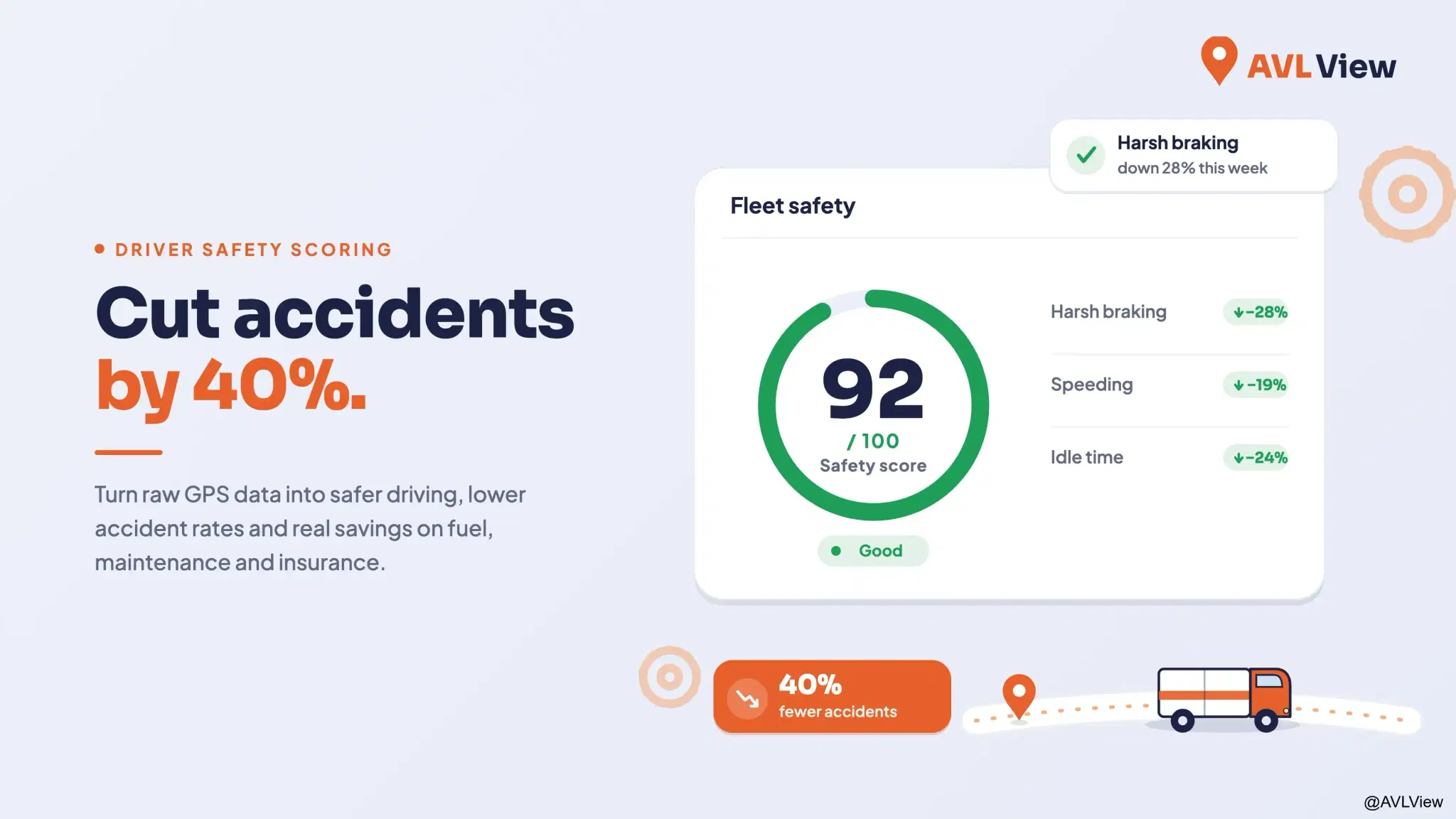
The Complete Guide to Driver Safety Scoring Systems
Learn how driver safety scoring systems work, how they reduce accidents by 40%, lower insurance premiums, and improve driving behaviour.
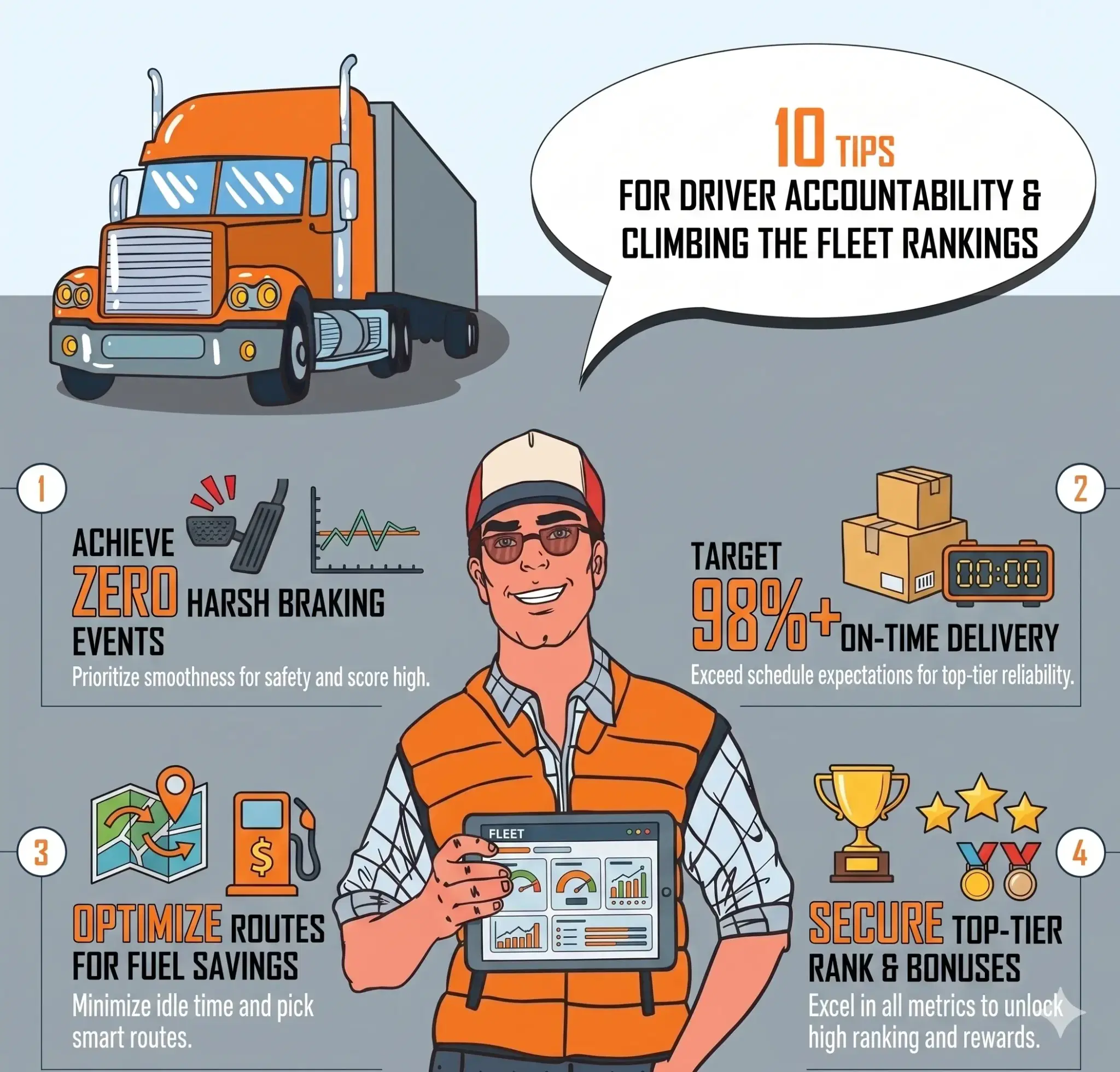
Driver Accountability: How Rankings Build Visibility and Healthy Competition
Rankings turn raw driving data into visible, comparable performance. See how safety scores, league tables, and trend tracking build accountability across your fleet.
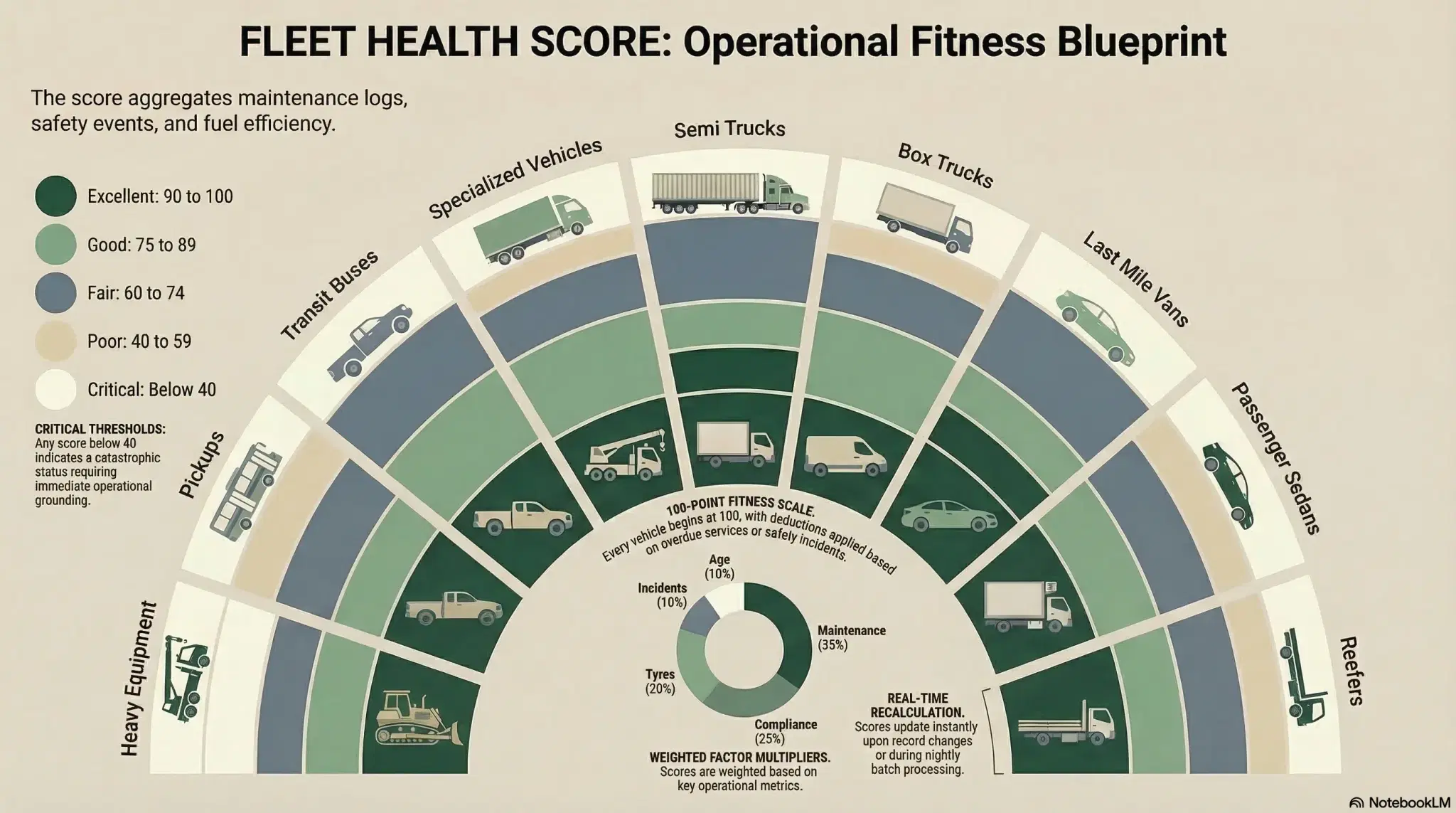
Fleet Health Score: One Number Per Vehicle
A single 0-100 fleet health score per vehicle replaces guesswork with clarity. Know exactly which vehicles need attention and why.
Join 43,000+ Fleet Owners Who Trust AVLView
AVLView helps you:
- Cut fuel costs by 8-15% within 90 days
- Improve driver safety and reduce accidents by 40%
- Get real-time visibility into every vehicle 24/7
- Automate reporting and save 10+ hours per week
- 30-day pilot program with no long-term commitment