GPS Tracking vs Telematics: What's the Difference — and Which Does Your Fleet Need?

What You'll Learn
GPS tracking answers where your vehicles are. Telematics answers how they're running, burning fuel and being driven. Here's how to choose.
Best for:
Logistics & Delivery professionals and fleet managers
GPS tracking tells you where a vehicle is: its live location, route history, and speed. Telematics tells you how that vehicle is running and being driven: fuel consumption, engine health, harsh braking, idling, and dozens of other data points read from the vehicle itself.
Every telematics system includes GPS tracking, but not every GPS tracker is a telematics system. That one sentence resolves most of the confusion — and the rest of this guide covers what each one actually delivers, what the difference costs, and which one your fleet genuinely needs.
What Is GPS Vehicle Tracking?
GPS tracking is the foundation layer. A device in the vehicle receives signals from GPS satellites, computes its position, and transmits it over the mobile network to a platform you view on a map.
That gives you a precise, timestamped answer to the "where" questions: Where is every vehicle right now? Where did it go yesterday? How fast was it moving, and how long did it stop?
For many fleets, that alone is transformative. Proof of delivery arrivals, recovered stolen vehicles, an end to "I was stuck in traffic" — live vehicle tracking pays its own way quickly.
What Is Telematics?
Telematics — the word merges telecommunications and informatics — starts with that same GPS position and then adds the vehicle's own data on top.
A telematics device doesn't just listen to satellites. It connects to the vehicle's CAN bus (its internal data network) and onboard sensors, reading what the vehicle already knows about itself: fuel level, engine RPM, odometer, coolant temperature, fault codes, seat-belt status, door openings.
It also measures how the vehicle is being handled — harsh braking, rapid acceleration, sharp cornering, over-revving, excessive idling. Position says where the vehicle went. Telematics says what happened to it on the way.
GPS Tracking vs Telematics: The Key Differences
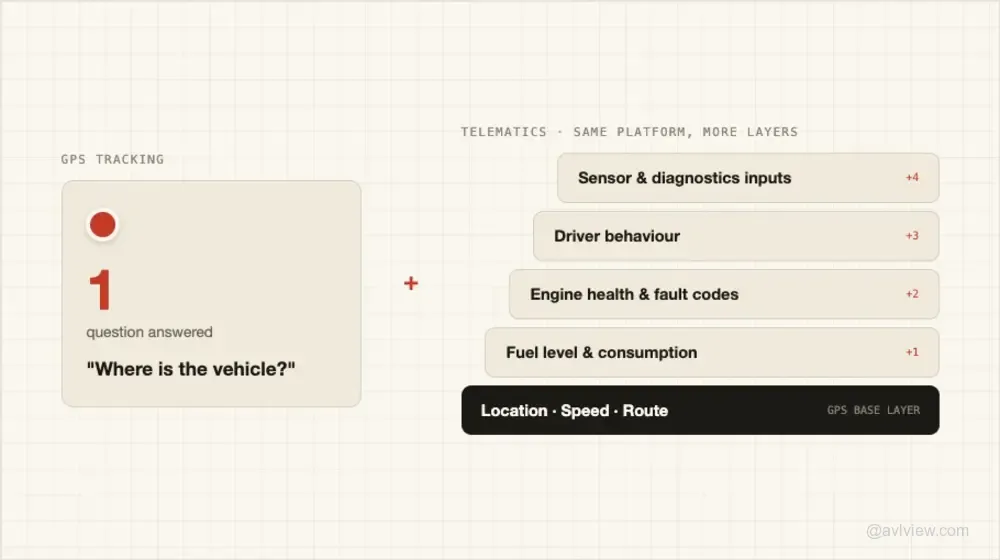
| GPS tracking | Telematics | |
|---|---|---|
| Core question | Where is the vehicle? | How is it running — and how is it being driven? |
| Data collected | Position, speed, heading, ignition | Everything GPS collects plus fuel, engine data, fault codes, driver behaviour, sensor inputs |
| Hardware | Basic GPS tracker (OBD plug-in or hardwired) | GPS tracker wired into the CAN bus and sensors |
| Typical alerts | Speeding, geofence entry/exit, after-hours use | All of those plus fuel drops, harsh driving, engine faults, maintenance due |
| Answers questions like | "Did truck 12 reach the depot?" | "Why does truck 12 burn 18% more diesel than truck 14?" |
| Cost per vehicle | Lower — entry-level hardware and subscription | Moderately higher — richer device, same platform |
| Best first fit | Small fleets, asset security, delivery proof | Fuel-heavy fleets, safety programmes, maintenance-driven operations |
The cost gap is smaller than most owners expect. The hardware differs by tens of dollars, not hundreds — the real difference is what the platform does with the extra data.
What GPS Tracking Alone Gives You
Be clear about what the basic layer already solves, because it's a lot:
- Live location and route history — every trip, replayable, with stops and durations
- Speed monitoring — instant alerts when a driver crosses the limit
- Geofencing — know the moment a vehicle enters or leaves a site, city, or country
- Theft response — a stolen vehicle with a live tracker is usually a recovered vehicle
- Utilisation basics — which vehicles moved, which sat idle all week
If your main problems are "I don't know where my vehicles are" and "customers keep asking for ETAs," GPS tracking solves them without another dirham spent.
What Telematics Adds
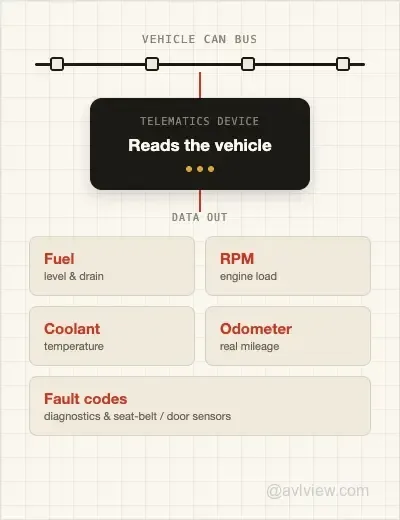
Telematics turns the same platform from a map into a management system. Four upgrades matter most.
1. Fuel intelligence. Real fuel-level curves per vehicle, refuel and drain events, consumption per route and per driver. Fuel monitoring is where telematics usually pays for itself first — typical fleets recover 8–15% of fuel costs.
2. Driver behaviour. Harsh braking, hard acceleration, cornering and idling — scored per driver, ranked across the fleet. Driver safety coaching built on this data cuts accident rates and insurance claims.
3. Engine health and maintenance. Fault codes and odometer data feed maintenance schedules automatically — services triggered by real mileage, breakdowns flagged before they strand a vehicle.
4. Operational reporting. Trip, fuel, utilisation and behaviour data combine into reports that answer the questions owners actually ask: what does each vehicle really cost per kilometre, and which ones should go?
Want to see the difference on your own vehicles' data? Explore fleet reports →
A Real Example: The Fuel Bill That Didn't Add Up
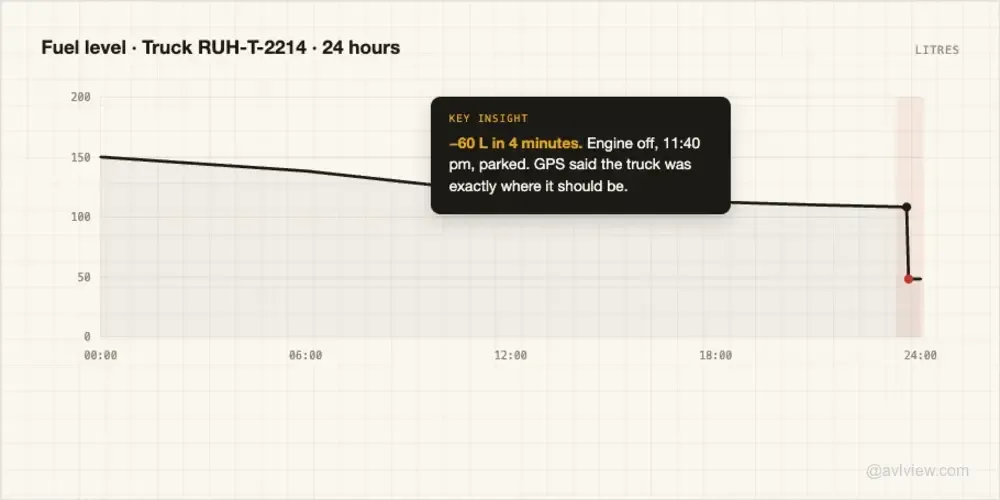
A distribution company in Riyadh ran eight trucks on plain GPS tracking. Locations checked out; every route looked clean. But the monthly fuel bill for truck RUH-T-2214 kept running roughly 20% above its near-identical twin on the same routes.
GPS data had no answer — both trucks drove the same kilometres. The company upgraded the pair to telematics devices wired to the fuel senders. Within two weeks the fuel curve showed it plainly: a 60-litre drop at 11:40 pm, engine off, parked at the driver's home stop.
Siphoning. The location data had been true the whole time — the vehicle was where it should be. It took the vehicle's own data to reveal what was happening while it sat there. The behaviour stopped the week the fuel-drop alert went live.
Which Does Your Fleet Need?
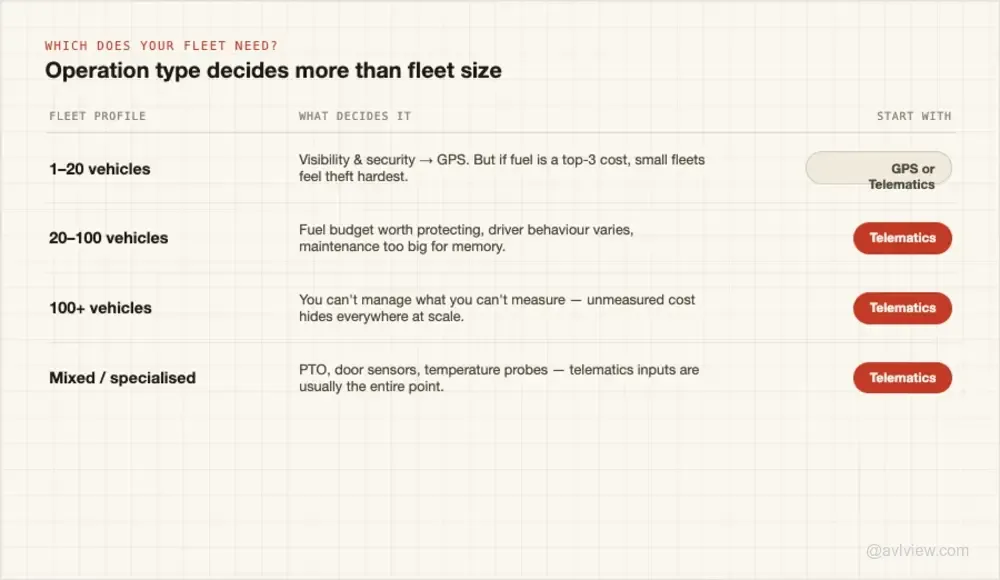
Fleet size is the obvious lens, but operation type decides more.
Running 1–20 vehicles? Start with GPS tracking if your pain is visibility and security. But if fuel is a top-three cost — delivery vans, water tankers, refrigerated trucks — go straight to telematics. Small fleets feel fuel theft hardest, because one bad vehicle is 10% of the fleet.
Running 20–100 vehicles? Telematics, almost always. At this scale you have a fuel budget worth protecting, enough drivers that behaviour varies widely, and a maintenance schedule too big to run from memory. This is where the 8–15% fuel recovery and fewer breakdowns compound fastest.
Running 100+ vehicles? The question inverts: you can't manage what you can't measure, and at enterprise scale unmeasured cost hides everywhere. Telematics data feeding your TCO, safety and maintenance programmes isn't an upgrade — it's the operating system.
Running mixed or specialised equipment? Construction machines, generators, school buses with student tracking — telematics inputs (PTO status, door sensors, temperature probes) are usually the entire point.
The Good News: You Don't Have to Choose Twice
Here's what vendors selling locked-in hardware won't tell you: the choice isn't permanent, and it isn't all-or-nothing.
AVLView is device-agnostic across 200+ GPS and telematics models. You can run basic trackers on low-risk vehicles and full telematics on the fuel-heavy ones — one platform, one dashboard, mixed hardware. And when a vehicle graduates from "where is it" to "what is it costing me," you swap the device, not the platform.
That's how 43,000+ fleet owners across the Middle East, Africa and Asia run it: start where the pain is, upgrade per vehicle as the numbers justify it.
Not sure which your vehicles need? Send us your fleet profile and we'll map it out. Get a free demo →
Frequently Asked Questions
Is telematics just GPS tracking with a different name?
No. GPS tracking is one component of telematics — the location layer. A telematics system adds vehicle data (fuel, engine, fault codes) and driver-behaviour data on top of position. Every telematics system can do GPS tracking; a basic GPS tracker cannot do telematics.
Do I need different hardware for telematics?
Usually yes. A basic GPS tracker only needs power and antennas, while a telematics device also connects to the vehicle's CAN bus or sensors to read fuel, engine and odometer data. The hardware cost difference is modest, and platforms like AVLView support both types side by side, so you can mix per vehicle.
Is telematics worth it for a small fleet?
If fuel is one of your top costs, yes — small fleets feel fuel loss disproportionately, and typical operators recover 8–15% of fuel spend once real consumption data is visible. If your only need is location and security on a handful of low-mileage vehicles, basic GPS tracking is the sensible start.
Can telematics data reduce my insurance premiums?
Often. Many commercial insurers offer usage-based or behaviour-based discounts when fleets can evidence safe driving with telematics data — harsh-event rates, speeding frequency and accident history. Even without a formal programme, documented driver scoring strengthens your negotiating position at renewal.
Does AVLView do GPS tracking or telematics?
Both, on one platform. AVLView supports 200+ device models from basic GPS trackers to full CAN-bus telematics units, so each vehicle can carry the hardware its job justifies — and you see everything in a single dashboard, from live location to fuel curves and driver scores.
Last updated: July 2026.
Ready to Transform Your Fleet Operations?
See how AVLView helps fleet managers like you cut costs, improve safety, and boost efficiency with real-time GPS tracking.
Related Articles
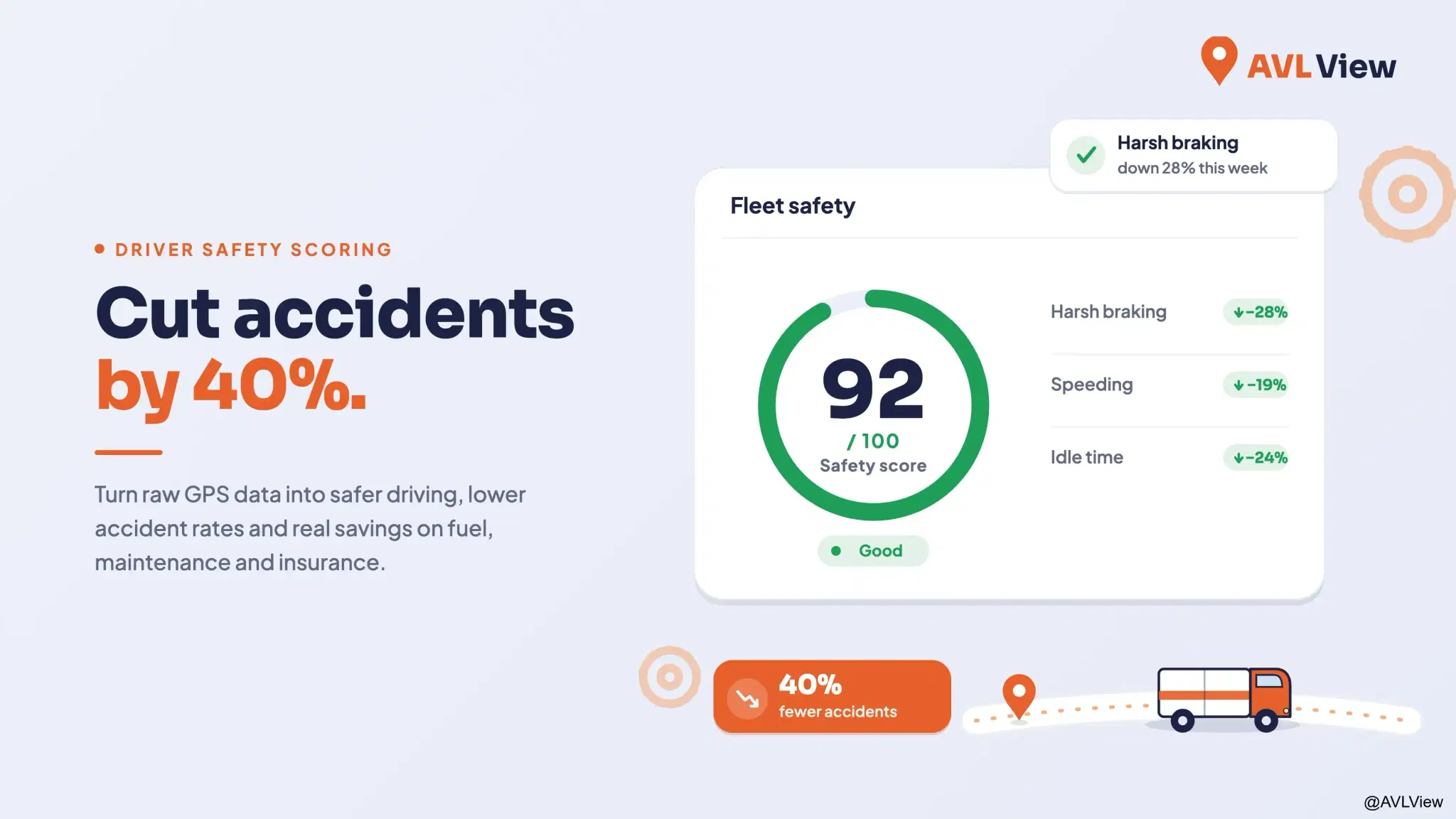
The Complete Guide to Driver Safety Scoring Systems
Learn how driver safety scoring systems work, how they reduce accidents by 40%, lower insurance premiums, and improve driving behaviour.
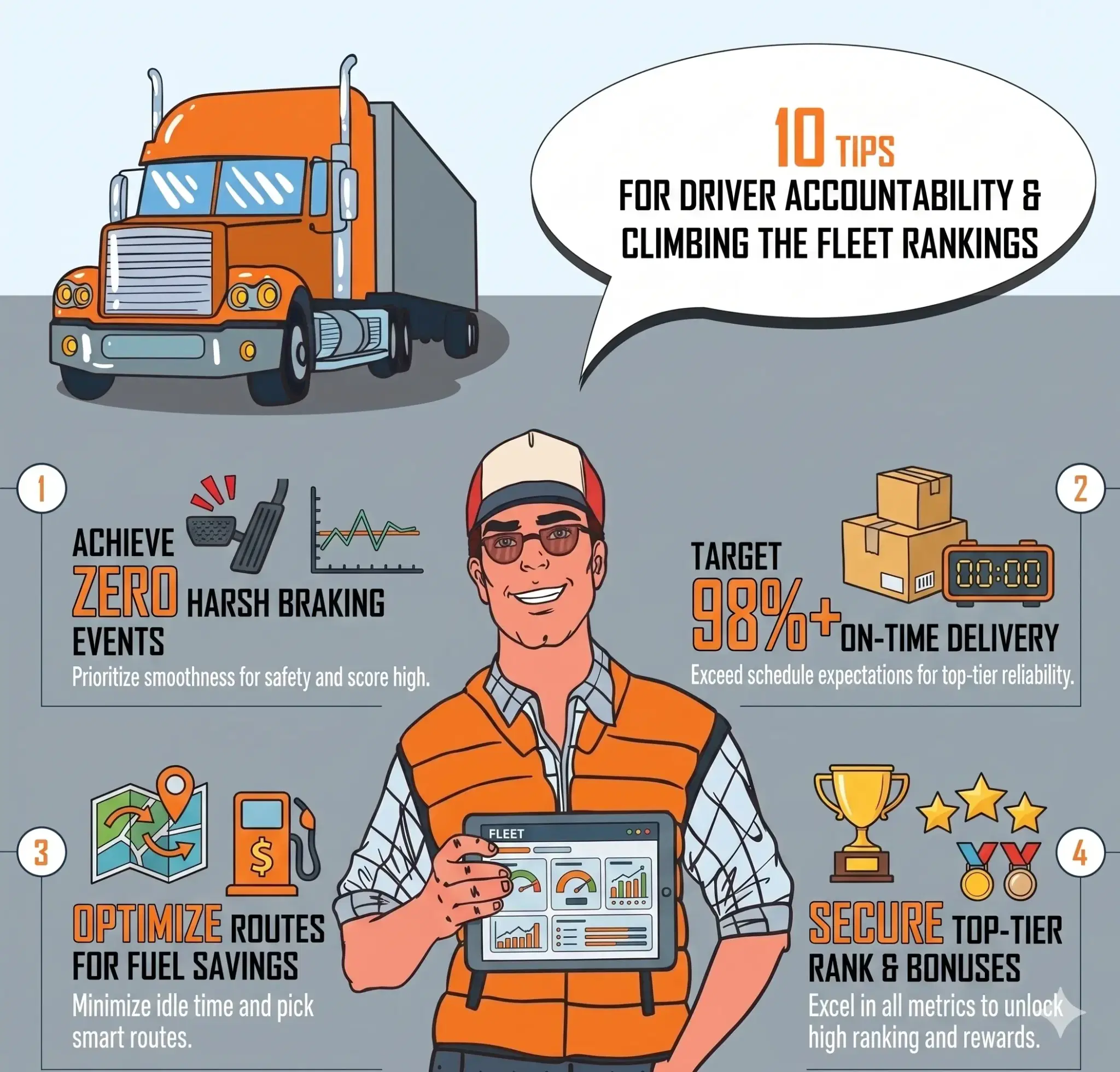
Driver Accountability: How Rankings Build Visibility and Healthy Competition
Rankings turn raw driving data into visible, comparable performance. See how safety scores, league tables, and trend tracking build accountability across your fleet.
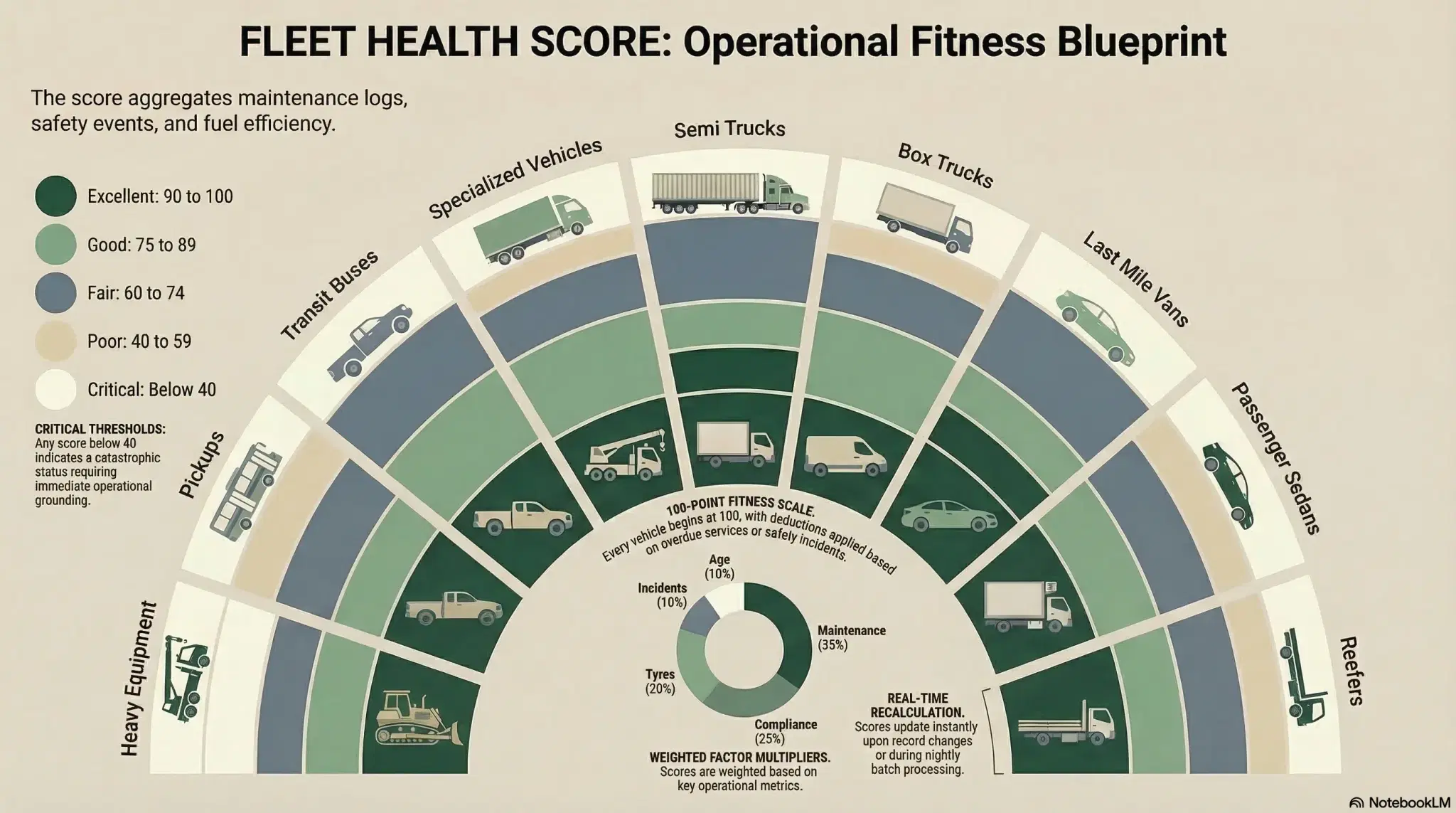
Fleet Health Score: One Number Per Vehicle
A single 0-100 fleet health score per vehicle replaces guesswork with clarity. Know exactly which vehicles need attention and why.
Join 43,000+ Fleet Owners Who Trust AVLView
AVLView helps you:
- Cut fuel costs by 8-15% within 90 days
- Improve driver safety and reduce accidents by 40%
- Get real-time visibility into every vehicle 24/7
- Automate reporting and save 10+ hours per week
- 30-day pilot program with no long-term commitment