Fuel Tracking System for Trucks & Diesel Fleets

What You'll Learn
Diesel truck fleets pay back fastest. Fleet fuel tracking measures litres per 100 km, compares near-identical trucks, and catches siphoning at rest.
Best for:
Fuel Management professionals and fleet managers
Fleet fuel tracking is the practice of measuring the diesel in each truck's tank directly — with a fuel-level sensor, a GPS device and fleet software — instead of estimating it from distance. For diesel-heavy fleets of trucks, lorries, buses, tankers and heavy equipment, it's the fastest-paying investment in the whole operation.
The reason is simple: trucks are where the fuel — and the loss — is biggest. A truck fuel tracking system tells you litres per 100 km for every vehicle, flags a sudden drain the moment it happens, and lets you compare two near-identical trucks on the same route. This guide shows how it works and why diesel fleets in the Gulf, Africa and Asia typically recover 8–15% of their fuel spend.
Why diesel truck fleets get paid back first
Not every vehicle is a good candidate for fuel tracking, but trucks are close to ideal. Their tanks sit externally — below the cabin or along the chassis — which is exactly where a fuel-level rod sensor fits and reads well. Cars and SUVs with internal, moulded tanks aren't suited to the same sensor.
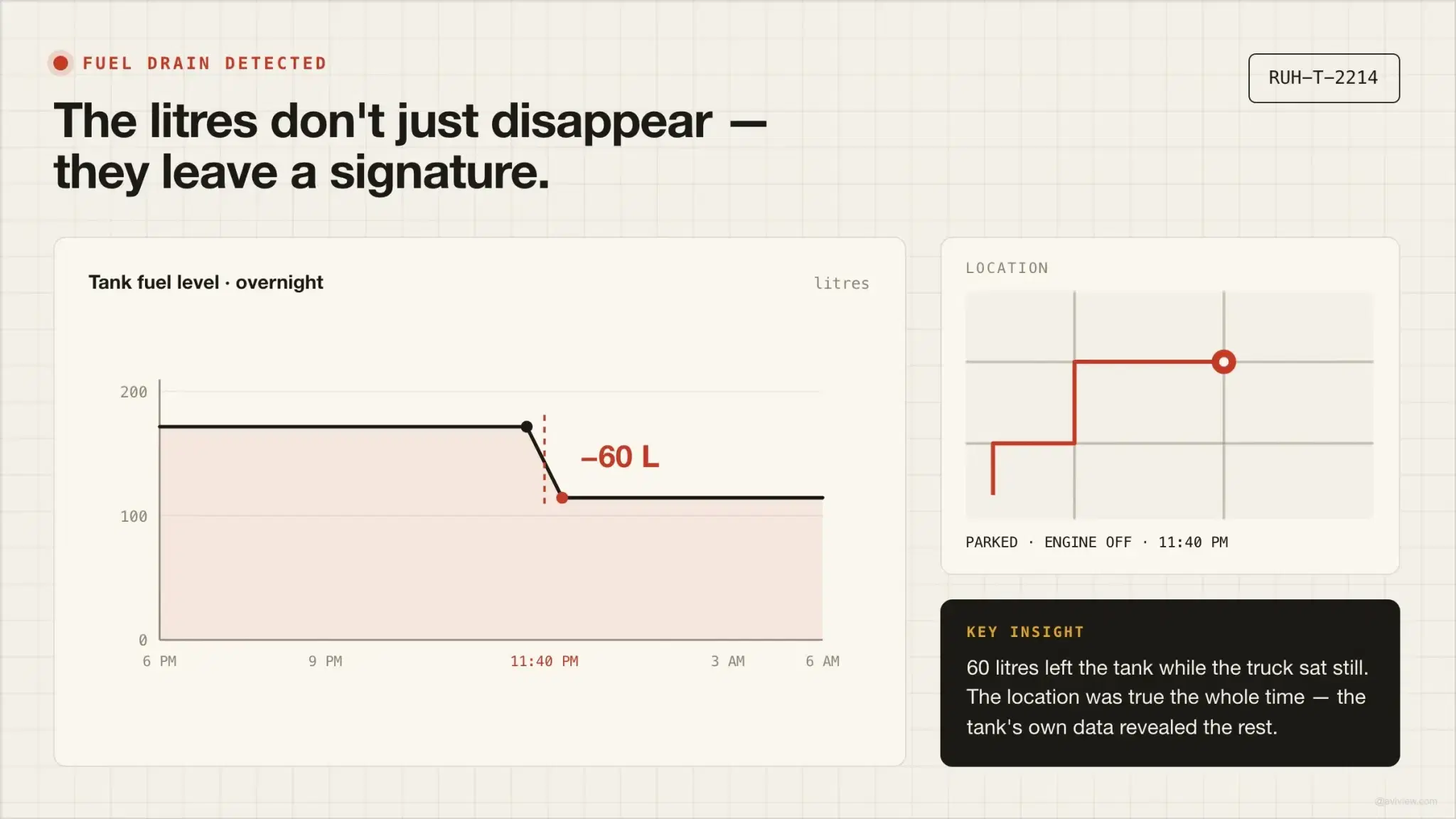
Diesel also loses fuel differently. The biggest single loss isn't on the road — it's at rest. Siphoning happens most while a truck is parked overnight with the engine off, and distance-based fuel logs miss it entirely because no kilometres were driven.
That's the whole case for measuring the tank directly. A truck that "should" burn 30 litres on a run and burns 34 raises no flag on a mileage report — but the tank knows the difference. Multiply four unexplained litres across a fleet, every day, and it becomes real money.
Heavy equipment makes the point even more sharply. A JCB or a generator set burns diesel by the hour with no odometer to reference at all, so distance-based accounting is useless from the start. The tank reading is the only honest measure of what went in and what came out.
What a fuel tracking system for trucks actually is
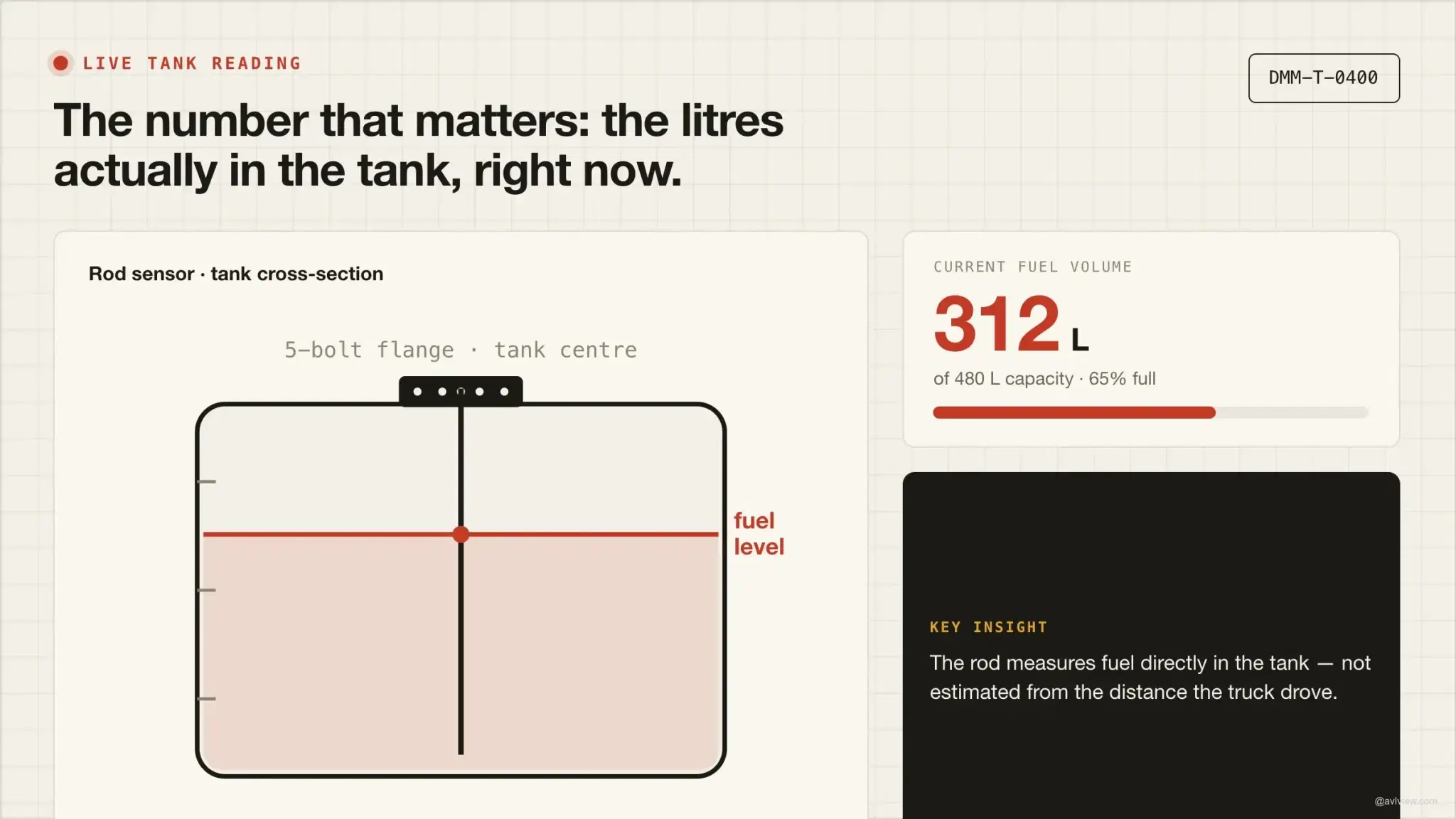
A fuel tracking system is three things working together: a fuel-level sensor in the tank, a compatible GPS device, and fleet software that turns the readings into numbers and alerts.
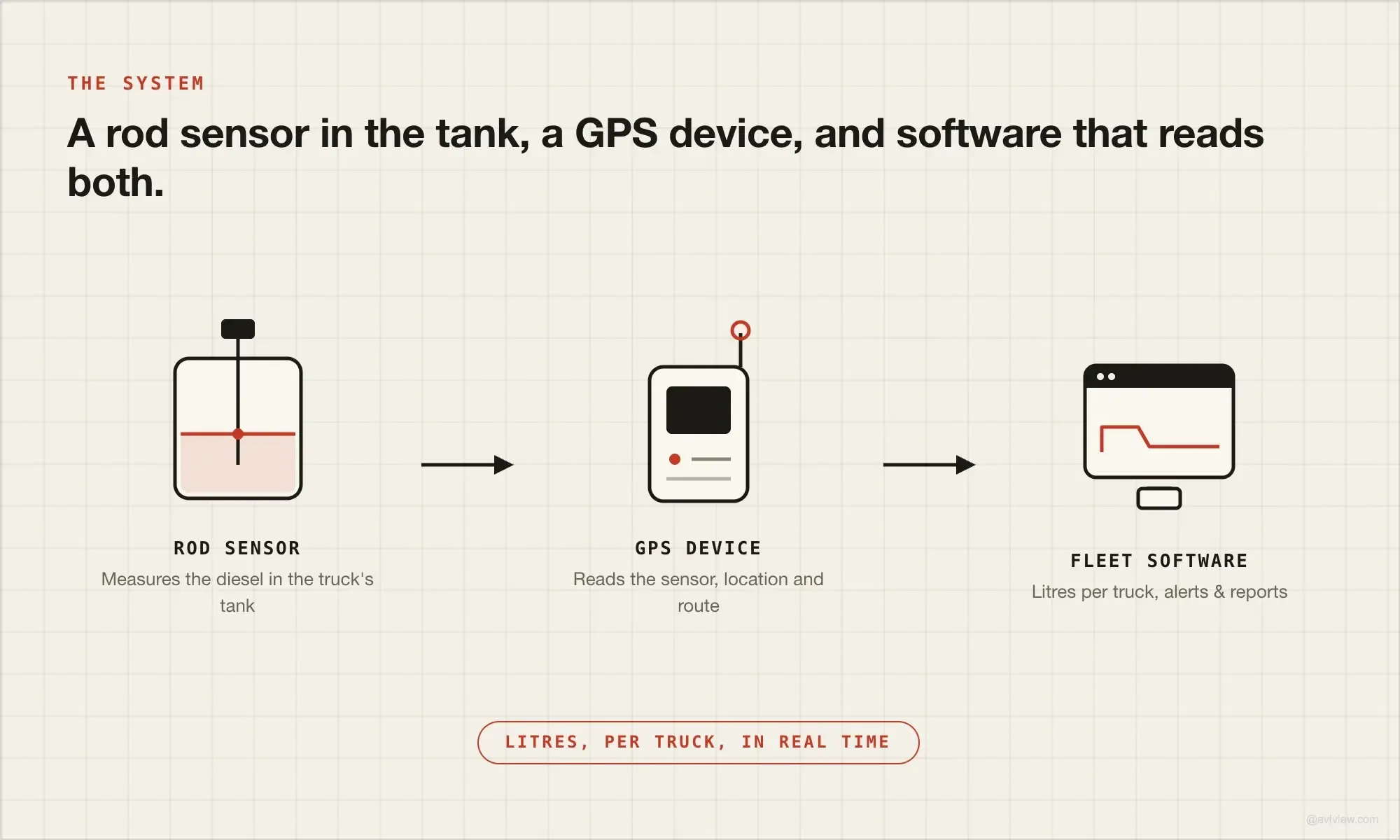
The rod sensor measures the actual fuel level continuously, not a float-gauge estimate. It's designed for the square, rectangular and oval diesel tanks you find on trucks, tankers and JCB-class equipment.
The GPS device has to be able to read that sensor — a basic location-only tracker can't. You need a device with the right serial input, plus fuel monitoring, route data and sensor-disconnection detection. If you're weighing plain tracking against sensor-grade telematics, our GPS tracking vs telematics guide lays out the difference.
The software is where it becomes useful. It shows live fuel level beside location, logs every refuel and drain, and builds the reports that make each truck's diesel accountable.
Litres per 100 km, truck by truck
The number that changes how you run a diesel fleet is litres per 100 km, calculated per vehicle from real tank data. Once every truck has one, patterns you couldn't see before become obvious.
A truck creeping upward month over month is telling you something — worn injectors, a lazy driver, or a slow leak. A truck that suddenly jumps has a specific event behind it. You stop arguing about averages and start looking at individual trucks.
This is also how the system reconciles refuels against driver fuel bills. The tank records the actual litres that went in; if a receipt says 60 and the tank rose by 45, you have a padded bill, itemised — not a hunch. Padded receipts are one of the most common quiet losses on a truck fleet, and a refuel record closes the gap without a single argument at the pump.
The twin-truck test: two identical trucks, one route
The most powerful thing fuel tracking gives a fleet owner is a fair comparison. Put two near-identical trucks on the same route and their diesel numbers should sit close together. When they don't, the gap is a signal.
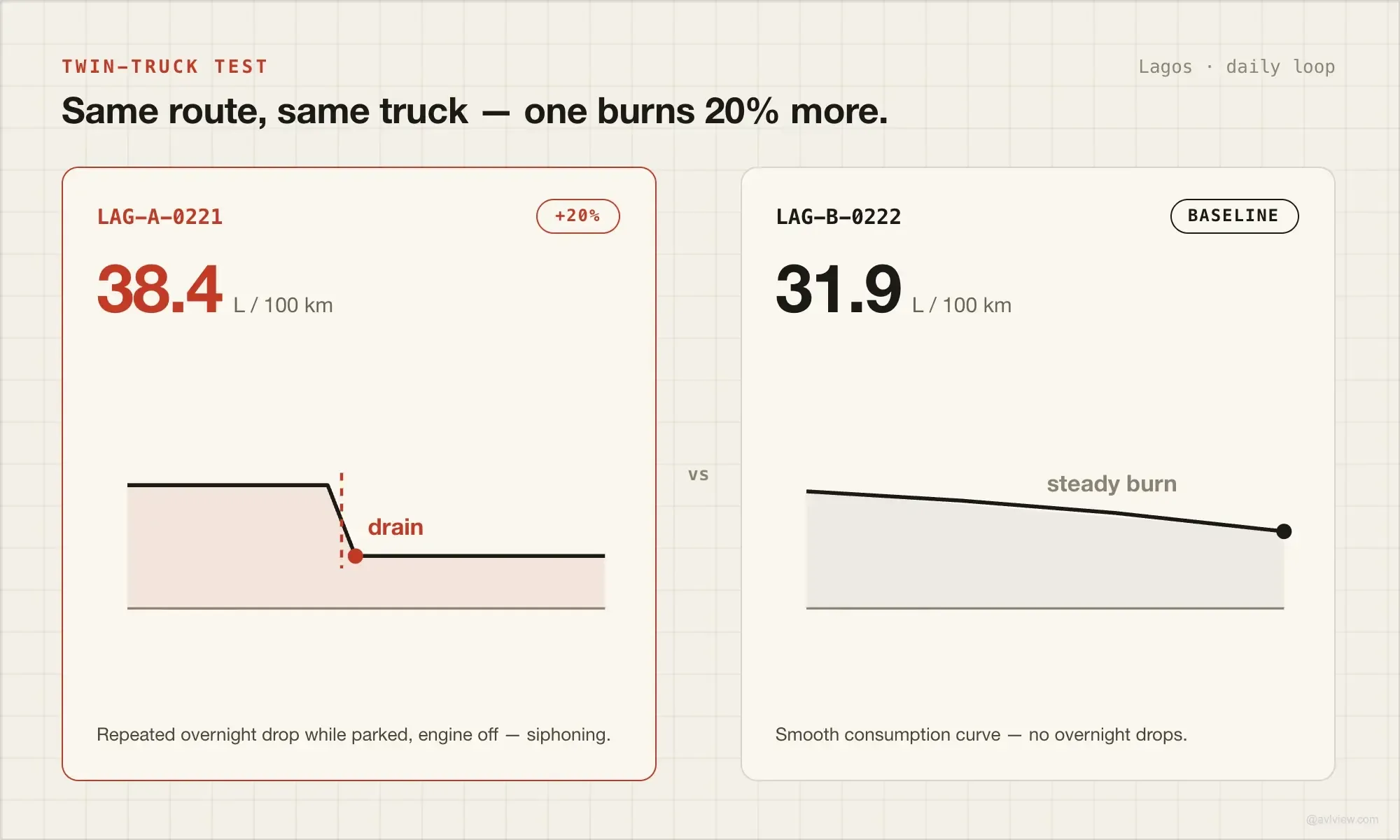
Take a Lagos distribution fleet running matched tippers on a fixed daily loop. Truck A and truck B are the same model, same load, same road — yet truck A quietly burns about 20% more diesel week after week.
Mileage reports had no answer, because both trucks drove the same kilometres. The tank data did: truck A showed a repeated overnight drop while parked, engine off — siphoning that never touched the odometer. The comparison caught what the route map couldn't, and the drain alert stopped it the same week.
That twin-truck test is the heart of fleet fuel tracking. You don't need a lab — you need two comparable trucks and one honest set of litres.
How accurate is truck fuel tracking?
Accuracy depends mostly on the tank. The sensor can reach up to 99.5% in ideal conditions; in practice a rod sensor reads to about 92% on square and rectangular tanks and around 85% on oval tanks, and accuracy improves over longer distances as short-term slosh averages out.
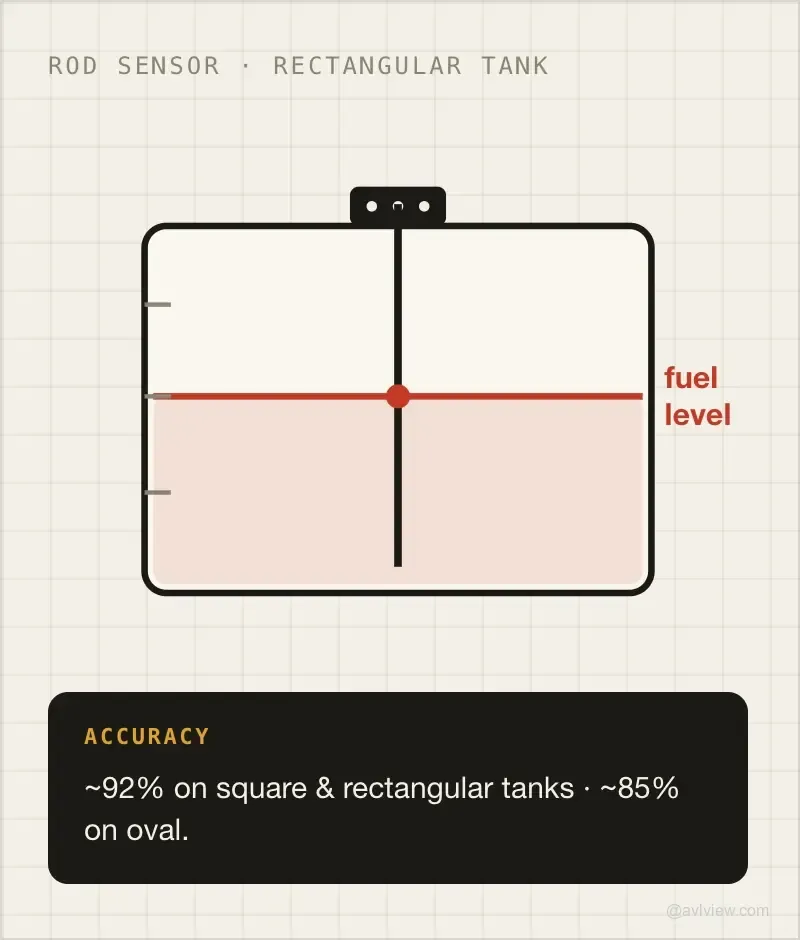
That's more than enough to run a fleet on. You're not billing customers to the millilitre — you're catching drains, verifying refuels and comparing trucks, and for that a stable 85–92% reading is decisive. Tank shape and condition matter, which is why professional installation and a calibration period are part of the job.
The alerts that keep diesel honest
Reports tell you what happened; alerts tell you while you can still act. Four alerts do most of the work on a truck fleet:
- Refuel alert — fires on any fill, with exact litres, date and time, so a padded fuel bill stops working.
- Fuel drain alert — fires when the level drops sharply past a threshold. A 60-litre drop at midnight on a parked truck is a drain, not a mystery.
- Sensor-disconnection alert — fires the instant a driver unplugs the sensor, turning that tamper into its own red flag.
- Route-deviation alert — flags off-route detours that burn diesel you pay for.
Drivers who know they're watched sometimes go straight for the sensor plug. If you want the full playbook on tampering and how each trick is caught, our fuel theft prevention guide covers it in depth.
See how AVLView tracks fuel across a truck fleet →
Cost per kilometre: the report that ends the guesswork
Once tank data is flowing, the reports get concrete. Fleet fuel tracking gives you cost per kilometre and fuel efficiency (km per litre) for every truck — the two numbers that actually price your operation.
Those numbers move for real reasons: theft, harsh braking, overspeeding, poor road conditions and skipped maintenance all show up as worse km/L. Because you can see which truck and which trip, you can fix the cause instead of absorbing the cost.
For an owner, this is the payback. A 10% improvement on your single biggest controllable cost, across a fleet of diesel trucks, is not a rounding error — it's the difference between margins in Riyadh, Dubai or Lagos.
Rolling it out across a mixed fleet
You don't fit everything at once. Start where the diesel — and the loss — is heaviest.
- Fit rod sensors to your thirstiest vehicles first — long-haul trucks, tankers and heavy equipment.
- Set the core alerts — refuel, drain and sensor disconnection — tuned to each tank.
- Run the twin-truck comparison on any vehicles that share a route.
- Reconcile one month of fuel bills against refuel data and measure the gap.
- Review litres per 100 km and cost per km weekly, and act on every outlier.
Stop guessing at your diesel bill
For a diesel truck fleet, fuel isn't a fixed cost you have to accept — it's a measurable one you can manage. Fleet fuel tracking turns a vague monthly number into litres per truck, per trip, per refuel, with the drains and padded bills named.
AVLView is device-agnostic across 200+ GPS models and the leading fuel-level sensors, so you can start on a handful of trucks and scale as the savings prove out.
FAQ
What is a fuel tracking system for trucks?
It's a fuel-level sensor fitted in the truck's tank, wired to a GPS device, and read by fleet software. Together they measure the actual diesel in each tank in real time — giving you litres per 100 km, refuel and drain alerts, and cost per kilometre instead of a distance-based estimate.
Why are trucks better suited to fuel tracking than cars?
Trucks, tankers, buses and heavy equipment have external tanks below the cabin or along the chassis, where a fuel-level rod sensor fits and reads accurately. Cars and SUVs with internal moulded tanks aren't suited to the same sensor, which is why fuel tracking pays back fastest on diesel fleets.
How accurate is diesel fuel monitoring?
A rod sensor can reach up to 99.5% in ideal conditions; in practice it reads to roughly 92% on square and rectangular tanks and about 85% on oval tanks, improving over longer distances. That's ample for catching drains, verifying refuels and comparing trucks — accuracy depends on tank shape, tank condition and calibration.
Can fleet fuel tracking catch siphoning?
Yes — and it's often the only thing that can. Siphoning happens mostly at rest, with the engine off, so distance-based logs miss it. Measuring the tank directly reveals the overnight drop, and a drain alert flags the litres, time and location while you can still act.
How much fuel can a truck fleet save?
Diesel fleets in the Gulf, Africa and Asia typically recover 8–15% of their fuel spend once tracking is in place — from stopped siphoning, verified fuel bills, and the twin-truck comparisons that expose thirsty vehicles. On a fleet's single biggest controllable cost, that is a meaningful margin.
Ready to Transform Your Fleet Operations?
See how AVLView helps fleet managers like you cut costs, improve safety, and boost efficiency with real-time GPS tracking.
Related Articles
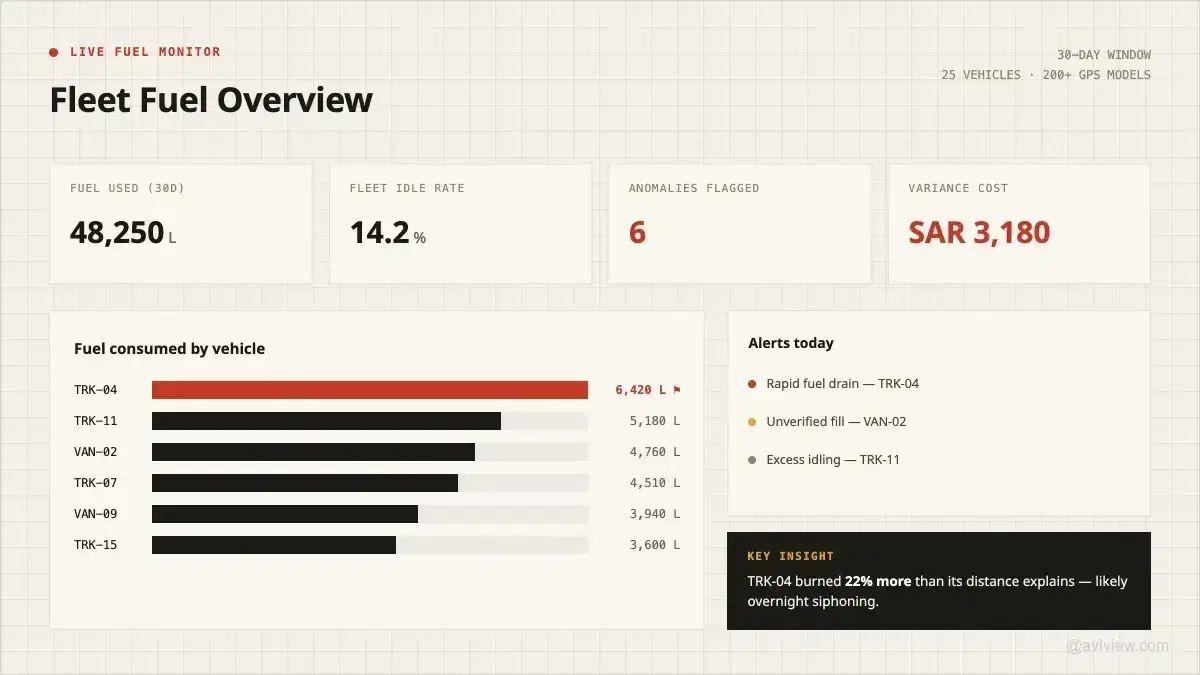
Fuel Consumption Control for Fleet Management
Fuel is your biggest controllable fleet cost. See the four levers — and the reports — that cut fuel spend 8–15%: idling, routes, driving and theft.
Fuel Theft Prevention: How to Stop Fleet Fuel Loss
Fuel theft can quietly drain a tenth of your fuel budget. Here's the sensor-plus-software system that catches siphoning, fake fills and tampering.
Fuel Level Sensors: How Fleet Fuel Monitoring Works
A fuel level sensor measures diesel directly in the tank — no guessing from distance. Here's how fleet fuel monitoring works, and how accurate it is.
Join 43,000+ Fleet Owners Who Trust AVLView
AVLView helps you:
- Cut fuel costs by 8-15% within 90 days
- Improve driver safety and reduce accidents by 40%
- Get real-time visibility into every vehicle 24/7
- Automate reporting and save 10+ hours per week
- 30-day pilot program with no long-term commitment