Why Construction Fleets Are Switching to Cloud-Based GPS Tracking
What You'll Learn
Construction fleets lose millions annually to equipment theft and downtime. Discover how cloud-based GPS tracking protects your heavy assets.
Best for:
Construction & Heavy Equipment professionals and fleet managers
The construction sector across the Middle East and Africa is booming — multi-billion dirham projects in Dubai, Riyadh, Lagos, and Abuja. But behind every major project lies a problem that costs companies millions annually: heavy equipment theft, unplanned downtime, and inefficient asset utilisation.
The Unique Challenges of Construction Fleets
Construction fleets are fundamentally different from delivery and logistics fleets:
- Multiple, changing job sites: Equipment moves between sites every few weeks
- High-value assets: A single excavator is worth AED 500,000–2,000,000
- Harsh environments: Dust, heat, and humidity damage standard devices
- Engine hours, not kilometres: Heavy equipment is measured by engine hours
- Subcontractors: Multiple people operate the same piece of equipment
Construction Equipment Theft: The Numbers
In Nigeria, Kenya, and the Middle East, construction equipment theft is a growing problem:
- Less than 20% of stolen equipment is recovered in Africa
- Average value per theft: AED 75,000–200,000
- Untracked equipment is 8 times more likely to be stolen
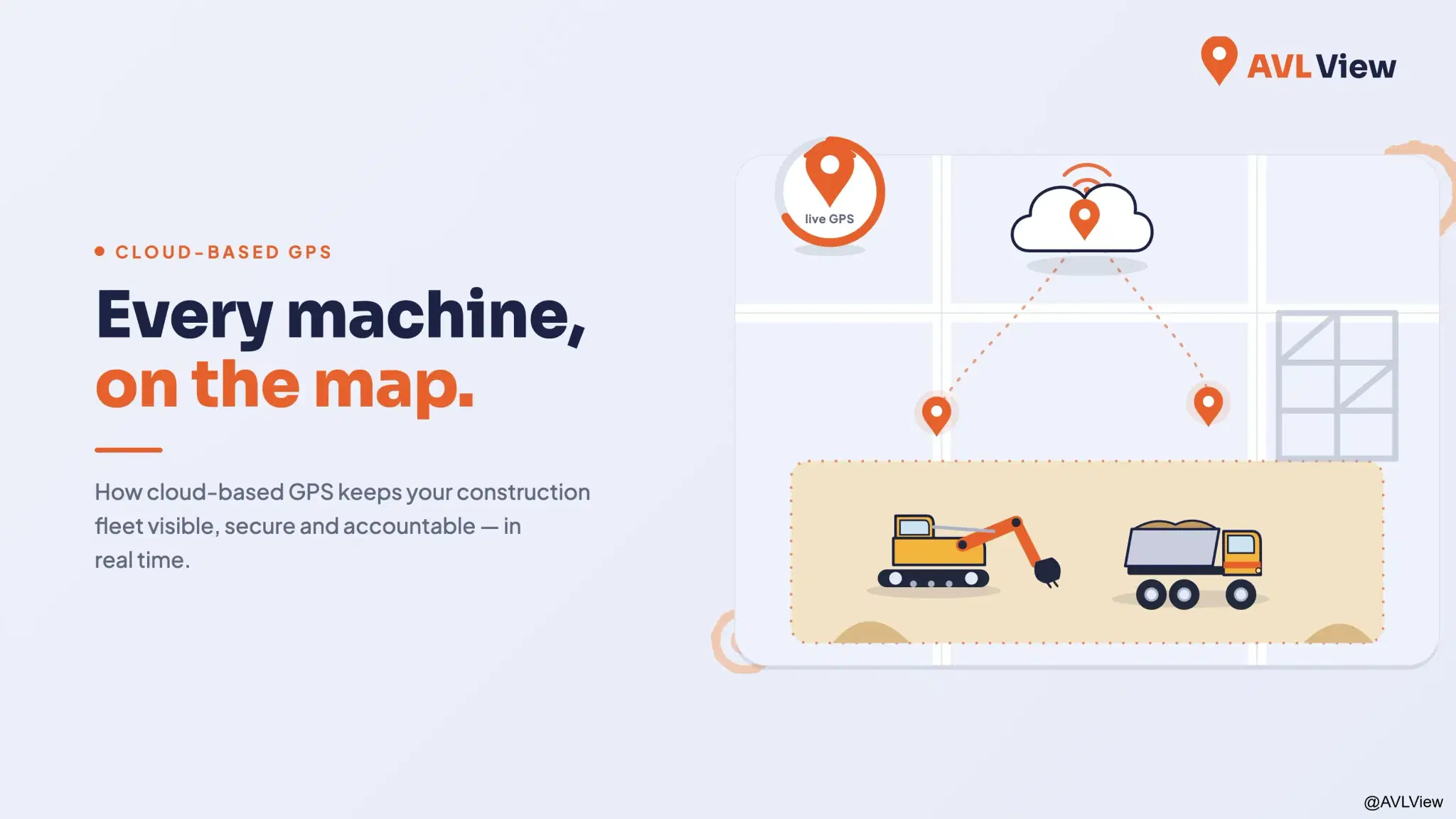
Cloud-based GPS tracking turns every piece of equipment into a monitored asset — with instant alerts on any unauthorised movement.
Why Cloud and Not Legacy Systems?
Traditional systems require local servers, expensive infrastructure, and a dedicated IT team. A cloud-based system offers:
- Access from anywhere: Monitor equipment from your phone or laptop wherever you are
- No upfront server investment: Monthly subscription with no infrastructure costs
- Automatic updates: New features without IT intervention
- Scalability: Add 100 devices or 1,000 with the same ease
- ERP integration: Connect tracking data to accounting and project management systems
Engine Hour Management and Preventive Maintenance
In construction, maintenance is scheduled by engine hours, not kilometres. A cloud GPS system tracks:
- Actual operating hours for each piece of equipment
- Automatic maintenance alerts when thresholds are reached
- Complete digital maintenance log for every asset
- Comparison of actual vs planned operating hours
Preventive maintenance reduces unexpected breakdowns by 50–70% — meaning less downtime and fewer costly project delays.
Optimising Equipment Utilisation
Most construction companies do not know their actual equipment utilisation rate. Our data shows that the average utilisation in unmonitored fleets is just 45% — meaning more than half the equipment sits idle at any given moment.
GPS tracking gives you complete visibility into each asset's utilisation rate, enabling you to:
- Redistribute equipment between sites based on actual need
- Reduce unnecessary rentals — you may own an idle machine that can cover the gap
- Plan new equipment purchases based on utilisation data rather than guesswork
Real Results
A construction company in Dubai with 150 pieces of heavy equipment:
- Zero thefts in 18 months (compared to 3 theft incidents per year previously)
- Unplanned downtime reduced by 38%
- Equipment utilisation rose from 42% to 67%
- Savings exceeding AED 1.2 million per year
Getting Started with Construction Equipment Tracking
AVLView supports tracking devices designed specifically for harsh construction environments — waterproof, dustproof, and shock-resistant, with batteries that last weeks without charging.
Start the 30-day pilot programme and protect your most valuable assets.
Ready to Transform Your Fleet Operations?
See how AVLView helps fleet managers like you cut costs, improve safety, and boost efficiency with real-time GPS tracking.
Join 43,000+ Fleet Owners Who Trust AVLView
AVLView helps you:
- Cut fuel costs by 8-15% within 90 days
- Improve driver safety and reduce accidents by 40%
- Get real-time visibility into every vehicle 24/7
- Automate reporting and save 10+ hours per week
- 30-day pilot program with no long-term commitment